Intro
Background
I led an innovative design hackathon during my tenure at Ladenzeile.de / Axel Springer. The design team explored new ways, ideas, and solutions to tackle one or more challenges.
The purpose of the design hackathon is to expand our boundaries. try to push the envelope of our existing limitations, Striking a balance between feasible solutions for the present and current platform constrains.
Intro
Goals
Problem Statement
The existing search functionality has a limited engagement time from users or is rarely used due to the majority of our traffic being directly from Google or other search engines; however, the offering for the search functionality for users has been limited only to keyword suggestions, driven by the goal of retention we wanted to bring a richer value to our search experience on the platform matching user needs while exploring our listings.
Discovery
Features Definition
When catering to expert users, we focus on helping them find matching products to their search criteria. To aid this process, we provide quick filters that allow them to stay on top of the latest trends and fashion seasons. Additionally, we suggest related products based on their specific search terms to further assist them in their search.
Hypothesis
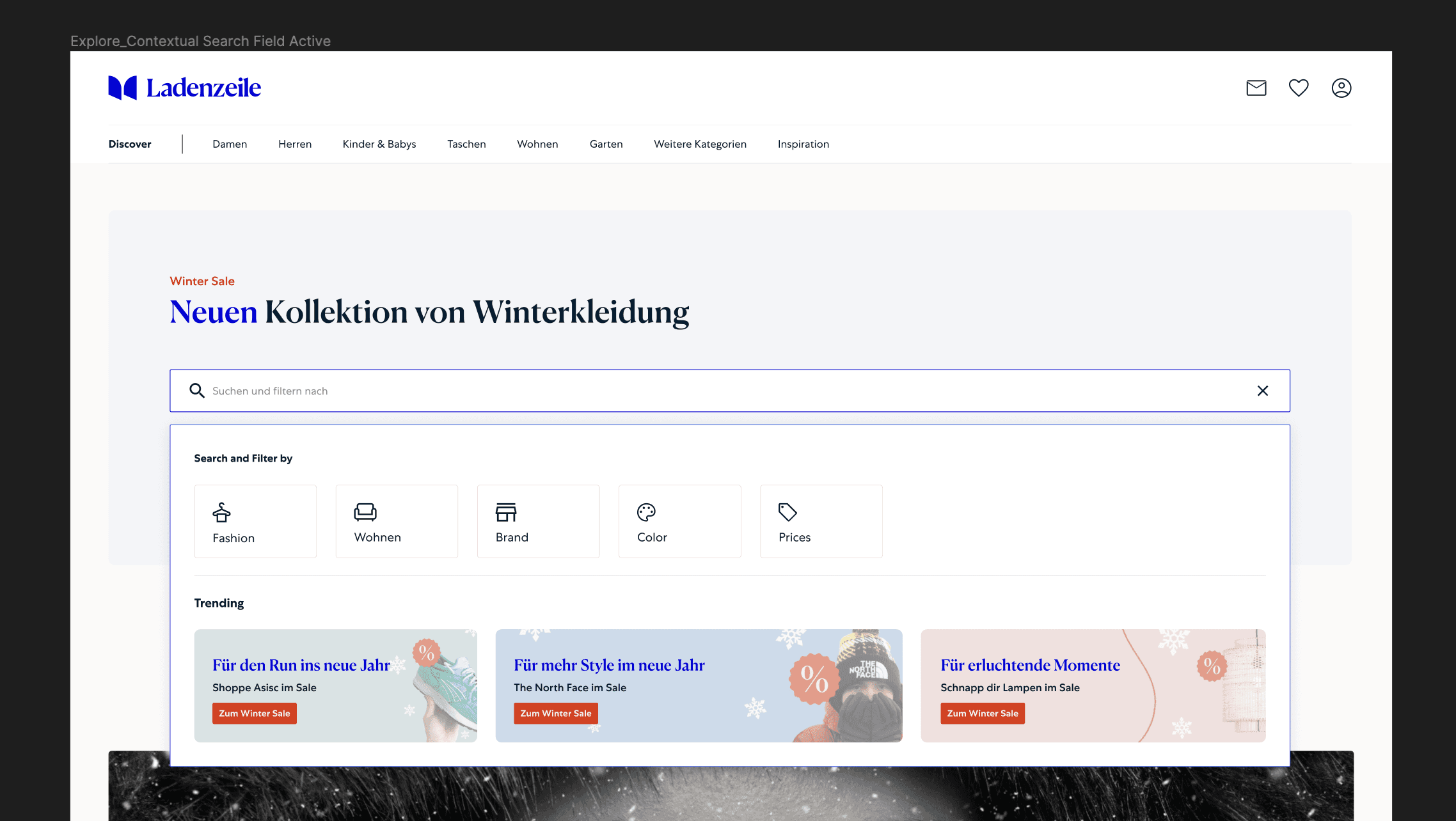
Frictionless entry points (all users)
Effective product discovery is a crucial factor in the success of any eCommerce platform. In fact, users typically evaluate whether their needs are being met within the first few seconds of interacting with the platform. With this in mind, we propose a new approach to help users quickly access different categories of products directly from the search field.
Products suggestion (explorative search)
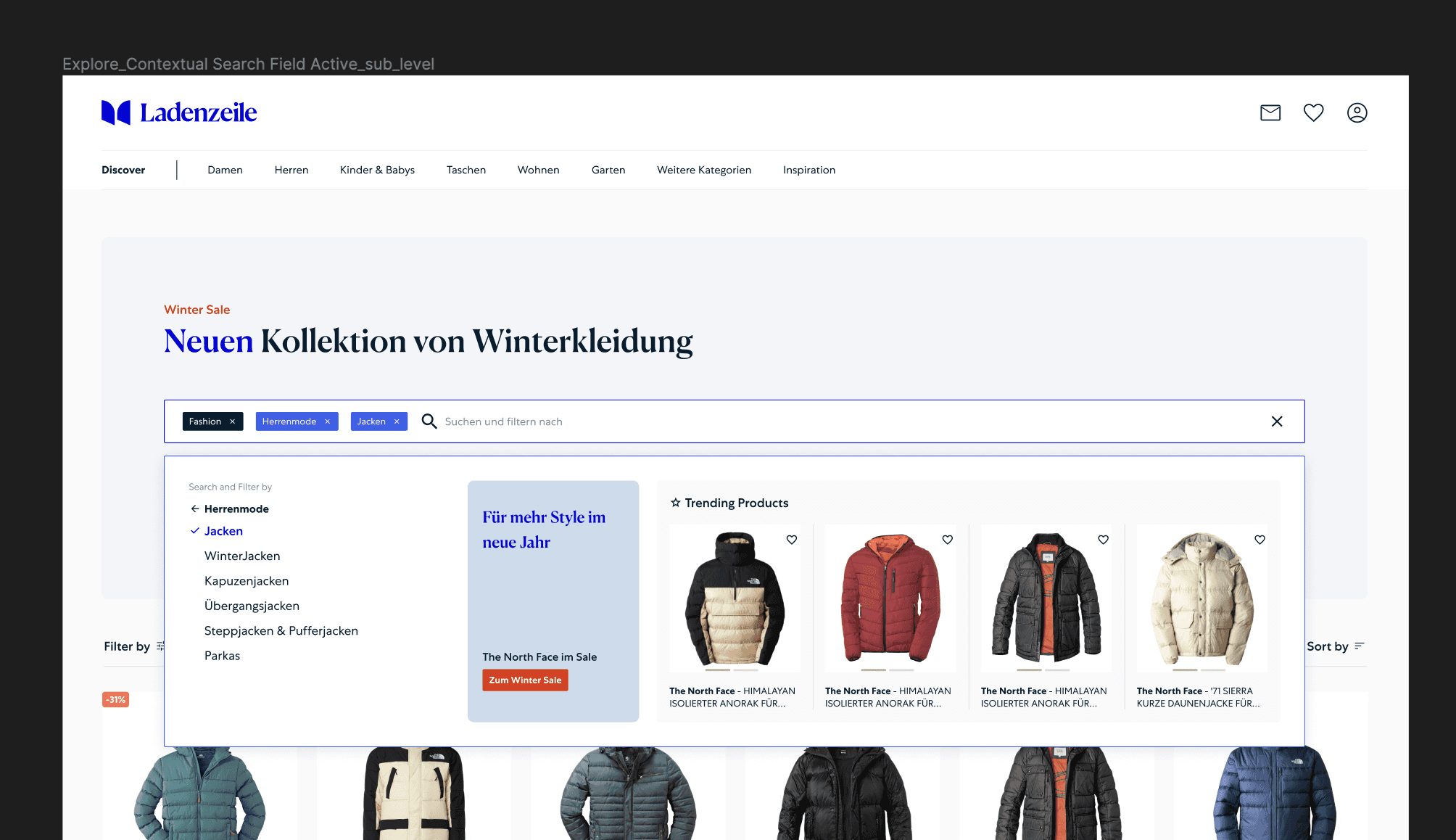
We wanted to explore an approach that guides users in an explorative search. Users can start by browsing through our entry points, such as "Categories" and "Trends", and we also offer product suggestions. Additionally, users can easily dismiss or add more selections to refine their search.
Contextual filter criteria (expert users)
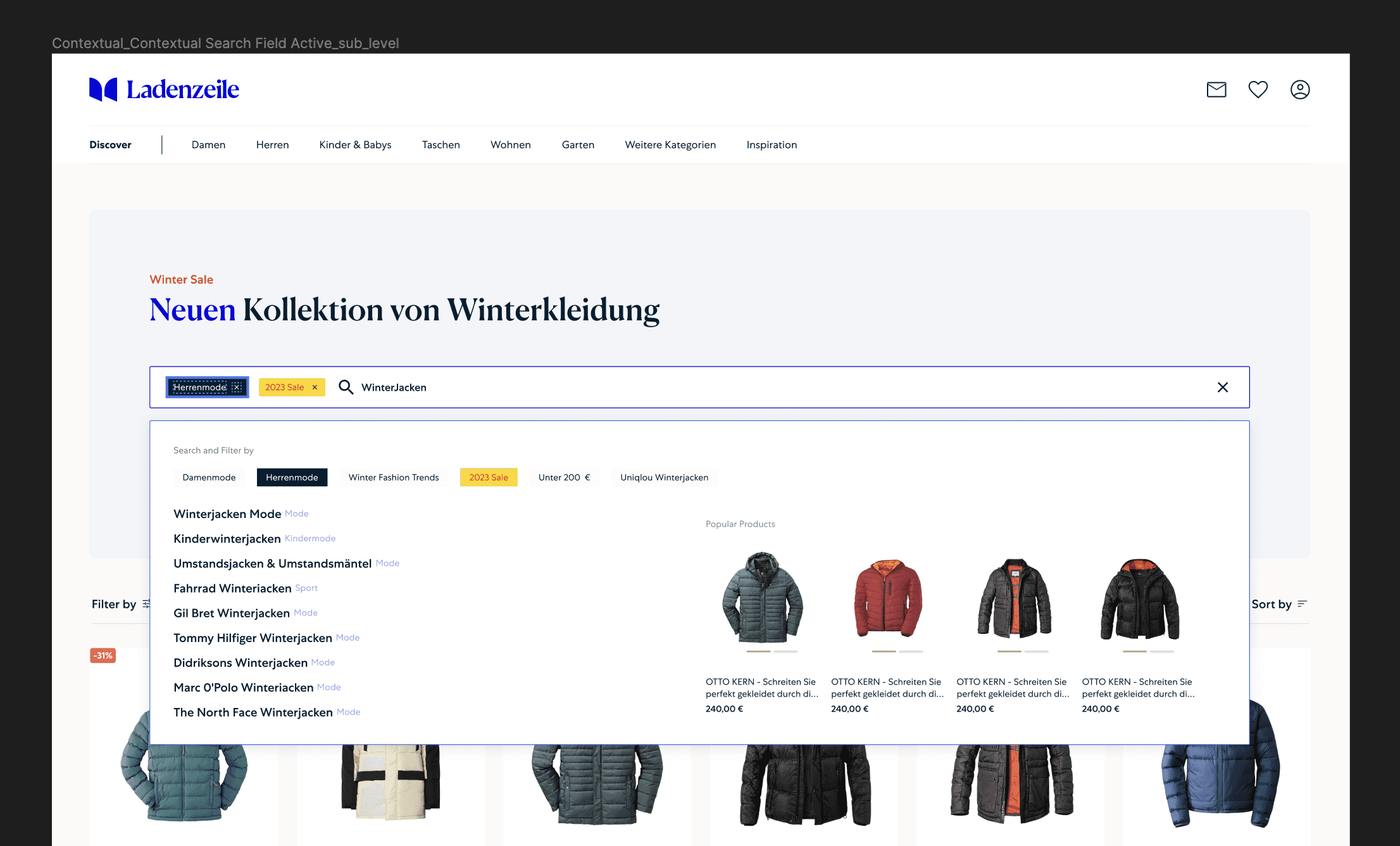
When catering to expert users, we focus on helping them find matching products to their search criteria. To aid this process, we provide quick filters that allow them to stay on top of the latest trends and fashion seasons. Additionally, we suggest related products based on their specific search terms to further assist them in their search.
Design Process
Key activities
When catering to expert users, we focus on helping them find matching products to their search criteria. To aid this process, we provide quick filters that allow them to stay on top of the latest trends and fashion seasons. Additionally, we suggest related products based on their specific search terms to further assist them in their search.
Protoype
Prototype
Interactive Prototypes
(Try it yourself below )
Explorative Search (Targeting new users)
In this prototype, we hypothesize users start their journey by either writing a keyword in our search field or exploring our categories directly when they begin their search journey. We assumed by reducing the friction to discovering our categories, we provide a quick path for our users to engage and find the products they are looking for.
Contextual Search (Targeting expert users)
In this prototype, we wanted to explore if a contextual search will provide less friction for users to find products than an explorative approach, and usually, it targets our expert users, who know what they are looking for, in that sense, we are trying to provider a better path for the user journey to reach and find a product they are looking for.
Results
Results
User experience and planned user testing research
The stakeholders provided positive feedback regarding the proposed solution, but there were concerns regarding user engagement, especially since it was an MVP.
The plan set to test the solution with users to determine whether it was effective in addressing the existing issues with our search field and to explore new ways of searching on our platform.